
Need Help?
+91 (997) 557 4955
B2/205, Sneha Vihar, Dangat Patil Nagar,
Shivane, Pune 411023 India
Send email
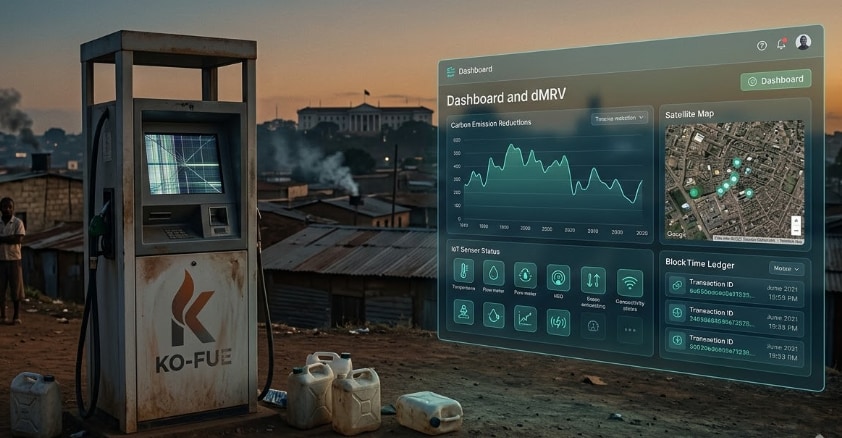
The recent collapse of KOKO Networks, a once-prominent clean-tech bioethanol fuel provider operating in East Africa, has sent significant shockwaves through the carbon credit and climate technology sectors. Having operated for over a decade in Kenya and expanded to India and Rwanda, KOKO Networks was widely celebrated for its innovative approach to delivering clean cooking fuel to millions of low-income households. Their fuel ATM technology allowed users to refill bioethanol stoves conveniently, supporting a transition away from harmful and polluting traditional fuels like charcoal and kerosene. However, beneath this promising technological success lay critical flaws in the company’s reliance on carbon credit revenues, which ultimately led to its downfall.
At Green Trust Protocol, we view KOKO Networks’ failure as a pivotal lesson on why transparency, accuracy, and rigorous verification are essential for the long-term viability of carbon credit projects. This event highlights the urgent need for robust digital Monitoring, Reporting, and Verification (dMRV) systems to safeguard the integrity of climate finance and protect communities involved in these projects.
KOKO Networks’ collapse can be traced back primarily to disputes with the Kenyan government over the volume of carbon credits the company intended to sell internationally. The government refused to grant them the necessary authorization, fearing that KOKO’s dominance would monopolize Kenya’s carbon credit market and undermine national climate commitments. This refusal came after years of growing regulatory scrutiny, reflecting Kenya’s increasing commitment to ensuring that carbon markets operate with transparency and fairness.
One of the fundamental reasons behind the government’s decision was the discovery that KOKO Networks had inflated its carbon credit claims. Although the company developed world-class technology and delivered tangible benefits—such as cleaner fuel access to over 1.3 million homes—the underlying business model depended heavily on revenue from selling carbon credits rather than from sustainable customer sales alone. For instance, KOKO subsidized bioethanol fuel prices by 25-40% and stove costs by as much as 85%. This heavy subsidization was intended to make clean cooking affordable but also meant their financial sustainability relied on generating large volumes of carbon credits.
Experts familiar with KOKO’s operations revealed that the company used questionable metrics in calculating carbon savings. They applied a very high Fraction Non-Renewable Biomass rate of 93%, which measures how much woodfuel comes from deforested sources—far exceeding Nairobi’s actual rate of about 38%. This single metric inflated KOKO’s carbon credits by roughly 2.4 times. Additionally, the company used distorted baselines that assumed urban customers previously used charcoal at rates far higher than reality, ignoring alternative fuels like LPG that many households already used. Despite having access to detailed digital data from their fuel ATMs—which recorded precise fuel consumption per household—KOKO chose to rely on small survey samples for their carbon accounting. This selective use of data further exaggerated their emissions reductions claims.
The fallout from this over-crediting was significant. An independent carbon rating agency gave KOKO’s credits a failing grade, indicating a low likelihood that the credits represented genuine removal of one tonne of CO2. The company’s failure serves as a warning sign for other clean-tech ventures that may be tempted to rely on inflated carbon credit claims to stay afloat.
The broader carbon market in Kenya has responded strongly to such challenges. Over the last decade, Kenya has built a robust regulatory framework aimed at improving transparency, protecting local communities, and ensuring that carbon credits represent real, additional emissions reductions. The Climate Change (Carbon Markets) Regulations 2024 introduced several key safeguards, including mandatory benefit-sharing rules that require a significant portion of revenues from land-based carbon projects—at least 40%—to be directed to local communities. For technology-based projects like clean cooking initiatives, at least 25% of revenues must support community programs.
In addition to financial safeguards, these regulations emphasize the importance of obtaining Free, Prior Informed Consent (FPIC) from communities before projects begin. Carbon credit developers must prove that local populations have given informed legal consent for projects on their lands. Moreover, projects intending to sell credits internationally must secure formal authorization letters from the government. These requirements allow Kenya to track carbon credit transactions transparently and ensure they contribute meaningfully toward national climate goals rather than undermining them.
Kenya’s National Climate Change Council, chaired by President William Ruto, now plays a central role in regulating how many tradable carbon credits are allowed each cycle. This move aligns trading volumes with Kenya’s Nationally Determined Contribution (NDC) targets under the Paris Agreement, preventing unchecked exporting of emissions reductions that could compromise national commitments.
Beyond regulation, Kenya also established the National Carbon Registry—a centralized digital platform that records and verifies all carbon credit transactions within the country. Managed by the National Environment Management Authority (NEMA), this registry enhances transparency and accountability across the sector. NEMA also oversees project approvals, environmental safeguards, and conducts compliance audits.
The importance of rigorous digital Monitoring, Reporting, and Verification (dMRV) systems in this context cannot be overstated. The KOKO Networks case starkly illustrates how reliance on outdated or incomplete data can lead to severe over-crediting and market distortion. dMRV employs digital technologies such as remote sensing, IoT devices, cloud computing, and blockchain to collect accurate real-time data on emissions reductions. This approach enables continuous monitoring rather than periodic manual surveys or self-reporting.
By capturing granular data directly from project activities—whether it is fuel consumption in households or soil carbon measurements in rangelands—dMRV systems provide a transparent and verifiable record accessible to all stakeholders: governments, investors, communities, and auditors. This transparency builds trust in the market and ensures that only genuine emissions reductions are monetized as carbon credits.
Furthermore, dMRV facilitates better engagement with local communities by documenting consent processes and benefit-sharing arrangements clearly. This documentation is critical to prevent conflicts related to land rights or community consent that have caused shutdowns in other projects across Kenya and East Africa.
The failure of KOKO Networks is not isolated but part of a wider reckoning in East Africa’s carbon markets. Other prominent projects like Northern Rangelands Trust’s soil carbon initiative and Soils Future Africa’s rangeland project have faced legal challenges due to inadequate community consultation or questionable lease agreements. These incidents underscore how fragile trust is in carbon markets without strong governance backed by reliable data.
At Green Trust Protocol, we are committed to advancing dMRV technologies that can help clean-tech companies avoid pitfalls like those experienced by KOKO Networks. Our platform integrates state-of-the-art digital tools that capture verified emissions data directly from project sites. We prioritize transparency by providing open access reporting dashboards where stakeholders can track project performance in real time. Additionally, we embed mechanisms to ensure fair benefit-sharing with local communities and alignment with national policies like Kenya’s stringent carbon market regulations.
We believe that credible carbon markets depend fundamentally on credible data. Without it, inflated claims will continue to undermine climate finance efforts and erode investor confidence. The KOKO Networks story is a powerful reminder that innovation must be coupled with integrity.
As governments worldwide tighten oversight of voluntary and compliance carbon markets, embracing dMRV is no longer optional—it is essential. Only through accurate monitoring and transparent verification can carbon credits fulfill their promise as a tool for genuine climate action that benefits both people and planet.
For anyone interested in learning more about how digital Monitoring, Reporting, and Verification can transform the integrity of carbon credit markets and accelerate climate solutions globally, we invite you to explore Green Trust Protocol. Together, we can build a more transparent, trustworthy future for climate finance.